Quiet Hours: Inside the Text-Only NWN Servers Where Nobody Ever Mutes
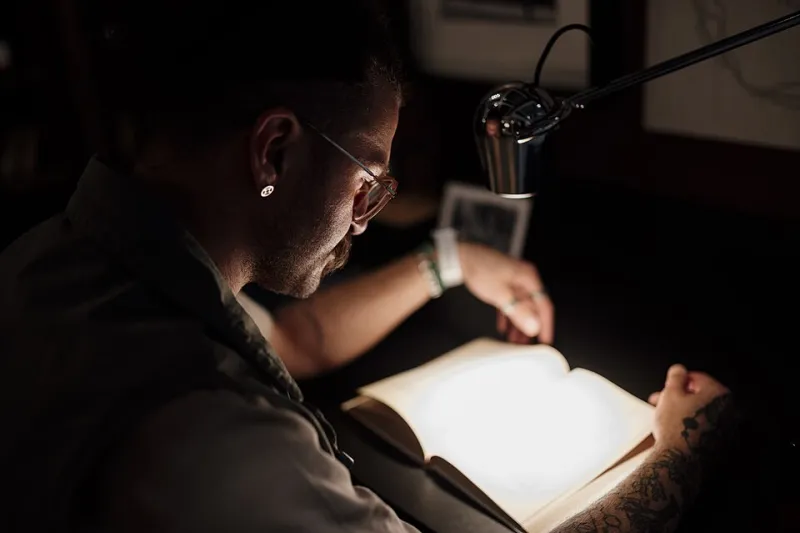
Photo: Shixart1985, CC BY 2.0, via Wikimedia Commons
It's 9:40 p.m. on a Tuesday, and twelve people are standing around a campfire in a forest that doesn't exist. Nobody is speaking. Somewhere on the other side of the country, a player types a slow, careful paragraph about the way their character's hands shake when they hand over a letter. Two others respond in kind. The server log records all of it — every line, every emote, every pause — and when the scene ends, sixteen people who never said a word out loud have collectively written a short story.
This is a normal night on a text-only Neverwinter Nights server, and there are more of them running in 2026 than there were five years ago.
The Rules Are the Point
Text-only servers aren't a technical limitation. Voice chat has been trivially easy to bolt onto this game for two decades. These are deliberate design choices, usually written into a server's charter within the first three paragraphs: no voice, no ventrilo, no Discord calls during scenes. Out-of-character coordination happens in a separate channel, or on a forum, or in a chat window flagged as OOC. The fiction stays in text.
The reasoning varies by community, but the same themes come up over and over. Voice privileges the fast, the loud, and the confident. Text gives everyone the same typing speed deficit and the same moment to think before they commit to a line. For a roleplay server, that pause is not a bug. It's the entire craft.
Why Newcomers Are Typing Instead of Talking
Server admins I spoke with describe a shift in who's arriving. A few years ago, text-only play was framed as a preference for veterans — people who had been roleplaying in writing since the days of AOL chat rooms and play-by-post forums. Now the new arrivals skew younger and, notably, quieter.
Several factors seem to be stacking. Voice-first multiplayer has become exhausting for a lot of people: the pressure to perform, the ambient noise, the low-grade anxiety of being on mic with strangers. Meanwhile, a generation raised on group chats and long-form messaging finds written roleplay intuitive rather than intimidating. And for anyone who has bounced off a voice lobby because they couldn't get a word in, a text server is a room with better acoustics.
The accessibility angle is bigger than it first appears. Deaf and hard-of-hearing players are fully included by default. So are players with speech differences, players in households where a microphone would wake a sleeping kid, and players who speak English as a second or third language and would rather have thirty seconds to compose a sentence than be judged on pronunciation in real time.
Moderation by Transcript
Ask any voice-based community admin about harassment and you'll hear the same grim joke: you can't moderate what you didn't record.
Text-only servers have the opposite problem, which is a much nicer one. Every interaction is logged. When a complaint comes in, a moderator can read the actual exchange rather than reconstruct it from five conflicting recollections. Most established servers publish a clear escalation ladder — a private warning, a public notice, a temporary mute, a ban — and the paper trail makes the whole process feel less arbitrary.
The cost is labor. Reading logs is slow work, and the admins doing it are volunteers with day jobs. Several servers have responded by formalizing the role: a moderation team with rotating shifts, a shared case log, and an appeal process. It's more bureaucracy than most hobby servers want, and the ones that skip it tend to burn out their founders within a year.
Storytelling That Doesn't Need Everyone Online at Once
Here's the part that voice-first games genuinely cannot replicate: text servers scale story across time.
A single scene might play out over three sessions. Between them, players post in-character letters, journals, and tavern gossip on the forum — material that other characters can discover days later. Some servers run in-game mail systems, notice boards, and player-run newspapers. A character can leave a message for someone who won't log in until Sunday, and the story picks up right where it was left.
That rhythm suits adults with jobs, kids, and unpredictable evenings. You don't have to be present for the whole arc to be part of it. Miss a big scene and you can read the transcript, then write your character's reaction to hearing about it secondhand — which is, frankly, how gossip works in real life.
What Voice-First Games Keep Getting Wrong
There's a lesson buried in these servers for the rest of the multiplayer industry, and it's not "voice chat is bad." Voice is wonderful for tactics and terrible for character. The games that blend the two — a voice channel for combat, a text channel for everything else — tend to produce the richest communities, and very few big-budget titles bother to build for it.
Instead, most modern multiplayer games assume that talking is the default and typing is the fallback. The result is a hierarchy: mic users at the top, everyone else off to the side. Text-only NWN servers invert that hierarchy by removing the option entirely. What's left is a level field, a slower tempo, and a community that has to earn its drama the old-fashioned way — one sentence at a time.
How to Try It Without Embarrassing Yourself
If you're curious, a few practical notes. Read the server's rules page before you log in; text servers tend to be stricter about naming conventions, character backstories, and staying in character than you might expect. Learn the emote commands — /me and its cousins — before your first scene, because nothing kills a mood like someone narrating in plain text. Start small: sit in a tavern, order a drink, listen. Nobody is timing your replies.
And if you're worried about being slow, don't be. On a text server, slow is the house style.