Riffing in the Digital Garage: How NWN's Toolset Turned Suburban Teenagers Into Game Developers
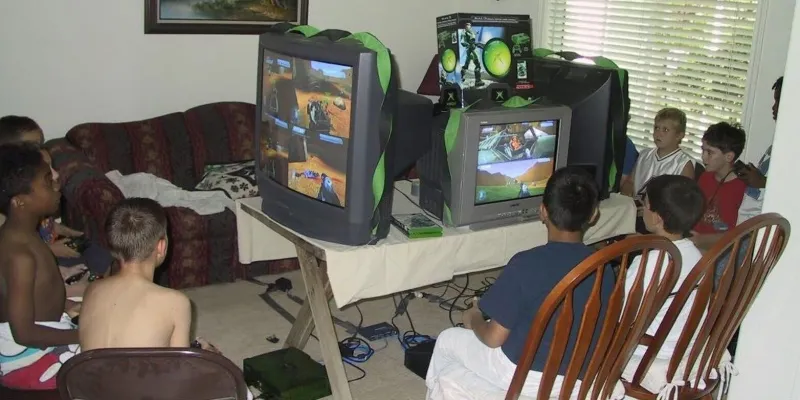
Photo: teenagers playing computer game in basement bedroom early 2000s, via s3.crackedcdn.com
Every American suburb has one. The garage where a band of fourteen-year-olds plugs in a pawnshop amp and plays the same four chords until the neighbors complain. Nobody expects the band to go anywhere. That's not the point. The point is the making.
For a certain generation of RPG fans, Neverwinter Nights was that garage.
When BioWare shipped the Aurora toolset in 2002, it did something almost unheard of at the time: it handed players the actual keys to the kingdom. Not a stripped-down level editor bolted onto the side of the game, but the same software the professionals used to build the campaign. Every wizard's tower, every kobold ambush, every tearful NPC farewell — all of it was sitting there in a drag-and-drop interface that ran on a beige Dell in a bedroom in Ohio.
Anyone With a CD-ROM and an Afternoon
Compare that to the landscape today. Roblox, Fortnite Creative, Dreams — the "anyone can build" movement is now a trillion-dollar marketing pitch. But NWN was doing it two decades earlier, and crucially, it was doing it without a corporate incentive structure. Nobody was monetizing their NWN module. Nobody was chasing an algorithm. Kids built sprawling forty-hour epics about their original characters because the tool was there and the itch was real.
"I was fifteen when I made my first module," says Marcus T., a network administrator in Minnesota who asked to go by his old forum handle, 'Duskblade the Grey.' "It was terrible. The dialogue was all one line. The balance was insane — every chest had a +5 sword. But I finished it. I put it on a mod site and eleven strangers downloaded it and one of them left a review that said 'pretty good, more traps next time.' More traps next time! That review kept me building for six years."
Marcus isn't an outlier. Scroll through any NWN archive and you'll find thousands of modules credited to creators who were in high school when they made them. Some went on to careers in the games industry — BioWare itself hired from the community. Most didn't. Most just built, released, and moved on to mortgages and kids and careers that have nothing to do with tilesets.
And yet the modules are still there. Downloadable. Playable. Like demo tapes in a shoebox.
The Garage Band Parallel Holds Up Better Than You'd Think
The indie music comparison isn't just a cute framing device. Garage bands democratized music production by proving you didn't need a studio — you needed instruments, a practice space, and the willingness to be bad in public. NWN's toolset did the exact same thing for game design.
Before 2002, if a teenager wanted to make an RPG, the path ran through computer science degrees and proprietary engines. After 2002, the path ran through a tutorial on a fansite and a weekend of trial and error. The scripts were janky. The camera angles were brutal. The romance subplots written by sixteen-year-olds were, let's say, earnest.
But that's the garage band experience. You cover other people's songs first — NWN's community remade classic D&D modules the way garage bands play Nirvana — and then, eventually, you write your own.
What the Kids Built
The hobbyist canon is deeper than most people realize. Modules like the Aielund Saga, penned by an Australian amateur over years of evenings, are held up today as better-constructed campaigns than plenty of commercial releases. The community's Hall of Fame reads like a mixtape passed around a locker room: rough edges everywhere, but ideas and heart in every track.
There's also something quietly radical about what the toolset taught. A whole cohort of now-middle-aged professionals learned project management, narrative structure, scripting logic, and the brutal math of encounter balance — not because a school assigned it, but because they wanted their dungeon to feel right. Ask around any NWN Discord and you'll find software engineers, teachers, screenwriters, and tabletop DMs who all point back to the same origin story: "I opened the toolset when I was thirteen."
The Garage Is Still Open
Here's the part that surprises newcomers: the band never broke up. The toolset still runs. New modules still ship — slower now, made by people with less free time and more skill, but they ship. The barrier to entry that made NWN the garage band of RPG creation never went up. It arguably went down, thanks to community patches and modernized tooling.
So if you're one of the millions who never opened Aurora — or one of the thousands who did, back when your biggest responsibility was a paper route — the door's still open. The amp's still plugged in. Nobody's expecting you to be good.
That was never the point.