Log In Whenever You Want: How NWN's Play-At-Your-Own-Pace Design Quietly Solves MMO's Biggest Problem
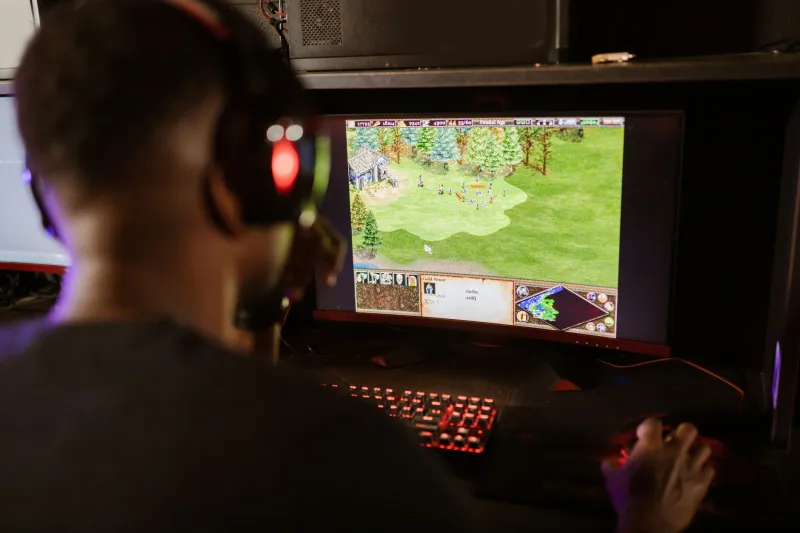
There's a conversation that happens in pretty much every major MMO community at some point. Someone posts in the guild Discord: "Hey, can everyone make it Tuesday at 8 PM EST for the raid?" And then the replies trickle in. One person has a kid now. Another works nights. Someone's in a different time zone. The raid gets rescheduled. Then rescheduled again. Then half the guild quietly stops logging in.
Neverwinter Nights never really had that problem. Not because its player base is more organized or more committed—but because the game was never designed to require synchronized participation in the first place. And in 2025, with MMO retention numbers quietly cratering across the industry, that design philosophy is looking less like an accident and more like accidental genius.
What "Asynchronous" Actually Means in Practice
When game designers talk about synchronous gameplay, they mean experiences that require multiple players to be present at the same time to function. Raids, world bosses, PvP queues, timed seasonal events—these all demand coordination. Miss the window, miss the content.
Asynchronous gameplay flips that. Players contribute to a shared world on their own schedules, and the world itself carries the continuity between sessions. You don't need six people online simultaneously to advance a storyline. You just need a world that remembers what happened when you were there.
NWN persistent worlds do this almost by default. A player-run server running a living campaign can store character progression, faction standings, crafted items, and even narrative consequences in its database. Log in at 2 AM on a Wednesday? The world is still there. Your character's reputation with the thieves' guild is still intact. The quest you started three weeks ago is still waiting.
That's not a technical limitation dressed up as a feature. That's a fundamentally different relationship between the game and the player's real life.
The Scheduling Tax Nobody Talks About
Here's something worth naming directly: synchronous MMOs charge what you might call a "scheduling tax." To access the best content, you don't just need skill or time—you need available time that matches someone else's available time. For a 22-year-old college student with a flexible schedule, that tax is low. For a 35-year-old with a job, a commute, and maybe a family, it's enormous.
The MMO industry has tried to address this in various ways. World of Warcraft added Looking for Raid, a more accessible version of its endgame content that could be queued into solo. Final Fantasy XIV built elaborate solo story content. Guild Wars 2 leaned into open-world events that could be joined mid-stream. These are genuine improvements, but they're all patches applied to a fundamentally synchronous foundation.
NWN persistent worlds didn't need patches because the foundation was different from day one. When a Dungeon Master on a persistent world crafts a storyline, they're often building something that unfolds over weeks, with different players catching different pieces of it at different times. Think less "scheduled raid night" and more "collaborative improv novel" where contributors drop in and out naturally.
Server admins who've been running communities for years will tell you the same thing: their most engaged players aren't necessarily the ones who log in the most hours. They're the ones who log in consistently, even if that means 45 minutes every few days. The game accommodates that. Most MMOs actively punish it.
Player-Run Campaigns and the DM Advantage
One of NWN's persistent world mechanics that doesn't get enough credit is the Dungeon Master client. Server admins can designate players as DMs who can spawn encounters, run events, and react to player actions in real time—but they can also set up scripted consequence systems that fire without a DM being present.
This creates a layered experience. When a DM is online, the world feels reactive and alive in a very immediate way. When no DM is logged in, the scripted systems carry the load. Players can still advance faction quests, trigger dynamic events, and contribute to ongoing server-wide storylines. The world doesn't go dormant the moment the admin clocks out.
Compare that to, say, a traditional MMO's "world event." There's a two-week window. A specific time each day when a boss spawns. Miss it and you get the consolation prize vendor. The content is technically available asynchronously, but the meaningful version of it—the version with the good loot, the community energy, the sense of participating in something—is firmly time-locked.
NWN's model doesn't have a "meaningful version" gated behind a schedule. The meaningful version is just... playing the game. Whenever you can.
Why Retention Looks Different Here
MMO developers obsess over daily active users and monthly retention curves. It makes sense from a business standpoint—live service games need consistent engagement metrics to justify ongoing development costs.
NWN persistent worlds operate on a different economy entirely. Most of them aren't monetized in any traditional sense. Server costs are covered by community donations. The "developers" are volunteer modders and admins who do it because they love the world they've built. This removes the pressure to engineer addictive engagement loops and replaces it with something simpler: build a place people actually want to come back to.
The result is a retention model that looks weird by MMO standards but makes total sense when you think about it. Some of the most beloved NWN persistent worlds have had the same core community for fifteen or twenty years. Not because players are logging in every day chasing a FOMO-driven content calendar, but because the world is genuinely theirs. They helped build it. Their characters have history there. The server remembers them.
That's not engagement through obligation. That's engagement through ownership.
The Lesson Modern Games Keep Almost Learning
It's worth noting that some modern games are inching toward this model. Games like Dwarf Fortress, Caves of Qud, and even some survival sandbox titles have embraced asynchronous community storytelling in interesting ways. The tabletop RPG space has leaned hard into "west marches" style campaigns—open-world, drop-in, player-driven—that mirror the NWN persistent world philosophy almost exactly.
But the major MMO studios keep circling back to the synchronous raid-and-schedule model because it's proven. It works, in the sense that it generates engagement spikes around content releases and keeps subscription numbers up during active seasons. What it doesn't do particularly well is keep players connected to a game five or ten years down the road.
NWN persistent worlds do that. Not through better graphics or more polished combat, but because they figured out—accidentally or otherwise—that the best way to keep people playing is to make the game fit around their lives instead of demanding their lives fit around the game.
That's not a small thing. In a genre that's been struggling with its own sustainability for years, it might actually be the whole answer.