Running Back to 3.5e: The Quiet Revolt of D&D Players Rediscovering NWN's Mechanical Soul
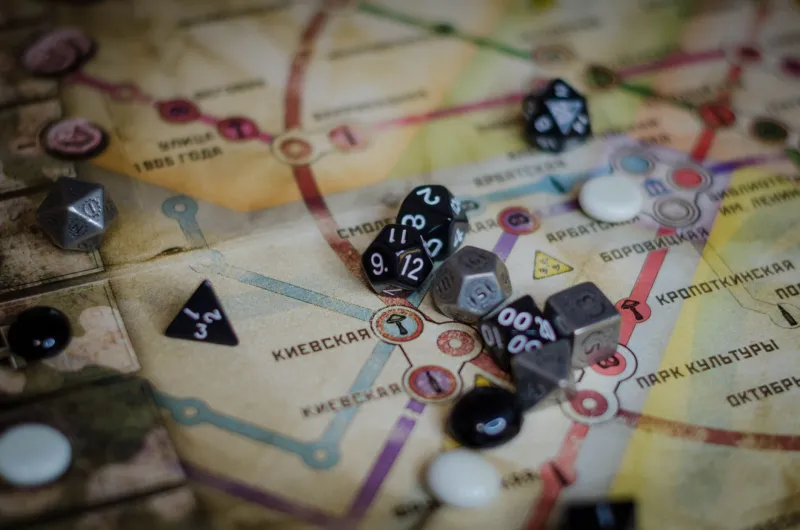
Something strange is happening on NWN's persistent world servers. Alongside the longtime regulars who never left, there's a fresh wave of players showing up — and a surprising number of them are refugees from 5th Edition. Not people who bounced off D&D entirely, but people who played 5E, liked it well enough, and then started feeling like something was missing. Eventually they went digging, found Neverwinter Nights, and didn't come back.
This isn't a massive exodus. Nobody's declaring 5E dead. But spend enough time in NWN community Discord servers or lurking the Neverwinter Vault forums and you'll notice the pattern: people arriving specifically because they want what modern D&D stopped offering. The math. The friction. The consequence of choices made at character creation that you can't just hand-wave away at level 5.
In short — they want 3.5e. And NWN is still the best place to play it.
What 5E Simplified (And Why It Eventually Bothers People)
Let's be fair to 5th Edition for a second. Its design philosophy was never a secret. Wizards of the Coast wanted to bring lapsed players back and lower the barrier for newcomers, and on those terms it worked spectacularly. Bounded accuracy, streamlined skills, short rests, advantage/disadvantage instead of stacking modifiers — all of it was engineered to make the game approachable. For millions of people, it succeeded.
But the players currently migrating back to NWN aren't necessarily arguing that 5E failed. They're arguing that it optimized for the wrong things. When you sand down the edges enough, you also sand down the decisions. Multiclassing in 5E is relatively painless. Feat selection is a limited menu. Class features arrive on a fairly predictable schedule regardless of what you pick. The game holds your hand in ways that feel supportive at first and then, for a certain kind of player, start feeling like a ceiling.
3.5e was built differently. It was built like a machine with a thousand moving parts, and if you didn't understand how those parts interacted, you were going to have a bad time. Prestige classes had prerequisites that required planning sessions ahead of time. Skills were granular and actually mattered in ways that shaped your character's whole identity. Saving throws were three separate stats with distinct strategic implications. Feats were everywhere and half of them were traps — but the ones that weren't could unlock genuinely broken, genuinely satisfying synergies.
NWN implements all of that. Faithfully. Ruthlessly. Beautifully.
The Optimization Rabbit Hole Is the Point
Talk to the players making this switch and a specific phrase keeps coming up: "build crafting." In NWN's 3.5e framework, building a character is a serious undertaking. A Pale Master dip on a sorcerer, a Weapon Master/Fighter hybrid, a Bard/Red Dragon Disciple chasing stat boosts — these aren't casual decisions. They require research, planning, and a genuine understanding of how the ruleset functions under the hood.
For a subset of RPG players, that process is the game. The dungeon crawling and the roleplay are great, but the hours spent theorycrafting a build that actually works — that's its own reward. And those players feel, increasingly, that 5E doesn't give them enough to chew on.
NWN's community has always understood this. The Neverwinter Vault is full of build guides that read like engineering documents. Persistent world forums host debates about optimal feat selection that would look completely at home on a competitive gaming subreddit. This is a community that takes mechanical depth seriously, and the game's fidelity to 3.5e is the reason that culture exists.
Simulation vs. Accessibility: Two Visions of What an RPG Should Be
There's a broader philosophical divide underneath all of this that's worth naming. 5E is fundamentally a storytelling game that uses mechanics to support narrative. The rules exist to facilitate fun moments, and the design is deliberately forgiving so that mechanical mistakes don't derail the experience.
3.5e — and by extension NWN — treats the rules themselves as the content. A bad build doesn't just feel suboptimal; it demonstrably underperforms. Choosing the wrong feats has real consequences. The game trusts you to either figure it out or fail trying, and it doesn't apologize for that.
Players returning to NWN are often people who've decided they prefer the second philosophy. They want a system that respects their investment enough to actually punish poor decisions. They want the mechanical complexity to be real, not cosmetic.
This is also why tabletop 5E players specifically find the transition jarring at first and then addictive. When a NWN character build actually clicks — when the synergies you planned for ten levels finally come online — the payoff is enormous precisely because the risk was real.
What NWN Offers That No Modern Platform Replicates
Here's the practical side of the argument: if you want to play 3.5e digitally in 2025, NWN isn't just the best option. It's basically the only option with a living, breathing community attached to it.
FoundryVTT modules and third-party tools can approximate 3.5e tabletop, but they require a group, a DM, and scheduling coordination. NWN's persistent worlds are always on. You can log into a server at 11pm on a Tuesday and find people playing. The infrastructure has been running for over two decades, maintained by volunteer admins who genuinely love the game.
That combination — deep 3.5e mechanics plus persistent, always-available worlds plus a community that's been refining the experience for twenty-plus years — is something no modern platform has managed to replicate. Not because they haven't tried, but because it takes that kind of time and dedication to build something that good.
The Counterculture Angle
There's also something a little punk rock about the whole thing, and it'd be dishonest not to acknowledge it. Choosing NWN over 5E platforms in 2025 is a statement. It's saying you'd rather dig into a 23-year-old game with a steeper learning curve than play the dominant, polished, widely-supported version of D&D that everyone else is playing.
For a certain kind of player, that's genuinely appealing. The NWN community has always had a bit of that energy — people who found something they loved and refused to move on just because something shinier came along. The new arrivals from the 5E world fit right in, because they're making the same kind of stubborn, values-driven choice.
They tried the accessible version. They appreciated what it was doing. And then they decided they wanted more.
Welcome to the Vault
If you're one of the players currently making this transition, or if you're a longtime NWN player watching it happen from the other side, the message from the community seems pretty consistent: there's room for everyone, the build guides are free, and the servers are running.
NWN's 3.5e implementation was never going to be for everybody. But for the players it's for, it's still one of the best mechanical experiences in the RPG genre — and a growing number of people are figuring that out all over again.
The migration is real. And honestly? The game's never looked better for it.